
E-commerce SEO in 2026: 5 Strategies to Rank on Google and AI Search
Master e-commerce SEO in 2026 with 5 proven strategies. Learn how to optimize product pages, category structures, structured data, and content for Google and AI-powered search.
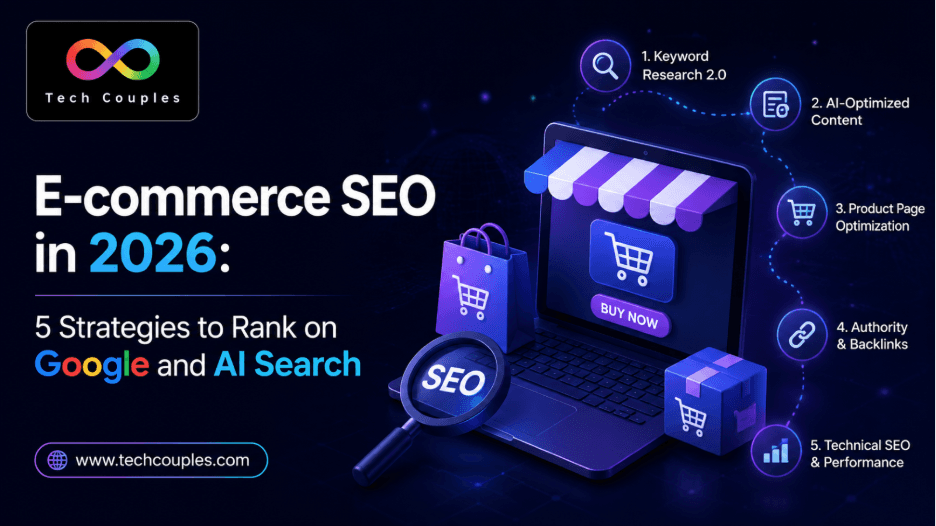
E-commerce SEO is changing fast. In 2026, online stores are no longer competing only for traditional Google rankings. Search experiences are also becoming more AI-driven, which means ecommerce brands need content that is useful for people and easy to understand.
ecommerce SEO in 2026 is therefore about much more than adding keywords to product pages. Strong technical SEO, helpful product information, structured data, internal linking, and trustworthy content can all help an online store become easier to discover. Google itself recommends clear ecommerce site structures, useful content, product data, and structured data to help Search understand online stores.
If you want sustainable organic traffic instead of relying only on paid advertising, these five strategies are worth implementing.
1. Build Product Pages Around Search Intent
Your product page should answer the questions a real customer has before making a purchase.
Instead of writing a short description such as “Buy premium shoes online,” provide useful details about:
- — Product features
- — Materials and specifications
- — Sizes or variants
- — Benefits
- — Pricing
- — Shipping information
- — Returns and warranty
- — Frequently asked questions
- — Genuine customer reviews
This is one of the most important ecommerce SEO strategies for 2026 because search engines need enough useful information to understand what your product offers.
Use your main keyword naturally in the product title, H1, introduction, URL, image alt text, and relevant headings. Avoid repeating the same keyword unnecessarily.
2. Improve Category Pages and Internal Linking
Many ecommerce websites focus heavily on individual products and forget about their category pages. That is a missed opportunity.
Effective ecommerce category page SEO helps search engines understand how your products are organized. Create useful category descriptions and connect categories, subcategories, and products through clear internal links.
For example:
Home → Men's Shoes → Running Shoes → Running Shoe Product
This structure helps users navigate your website and gives search engines clearer signals about the relationship between important pages. Google recommends linking from menus to categories, subcategories, and product pages so important products can be discovered through normal navigation.
Also link your strongest products from relevant blog posts and high-authority pages on your website.
3. Use Structured Data to Explain Your Products
Search engines have to understand information such as product names, prices, availability, ratings, shipping, and returns. Structured data can provide clear, machine-readable information about your pages.
For ecommerce websites, relevant structured data can include Product, Product Group, Review, Breadcrumb List, and Organization markup.
Google also states that Product structured data can make product information eligible for richer appearances in Search, including information such as price, availability, and review ratings.
This is where ecommerce AI SEO becomes especially useful. The clearer your product information is, the easier it can be for search systems to understand your products and their attributes.
However, remember that structured data does not guarantee a rich result or higher ranking. It should support a technically sound and genuinely useful page.
4. Create Content for AI Search, Not Just Traditional Rankings
AI search is changing how people discover information. Instead of typing several short searches, users may ask detailed questions such as:
“What are the best running shoes for beginners who run five kilometres every day?”
Your content should be prepared for these conversational searches.
This is where AI SEO for ecommerce can complement traditional SEO.
Create helpful content around questions your customers actually ask. For example:
- — How do I choose the right product size?
- — Which product is best for beginners?
- — What is the difference between Product A and Product B?
- — Which material lasts longer?
- — What should I consider before buying this product?
Use clear headings, short paragraphs, comparison tables, bullet points, expert explanations, and original information.
Don't create content simply to manipulate AI systems. Write to the customer first. Google's guidance emphasizes accuracy, quality, and relevance when creating web content.
In 2026, Google has also introduced dedicated Search Console reporting for visibility from generative AI features such as AI Overviews and AI Mode, although the reporting is being rolled out gradually.
5. Strengthen Trust, Technical SEO, and User Experience
A website can have excellent content and still struggle if the technical foundation is weak.
Review these areas regularly:
| SEO Area | What to Check |
|---|---|
| Mobile SEO | Easy navigation and readable content |
| Page Speed | Fast loading on mobile and desktop |
| URLs | Simple, descriptive URLs |
| Indexing | Important pages should be crawlable |
| Internal Links | Connect related categories and products |
| Product Data | Keep price and availability accurate |
| Reviews | Display genuine customer experiences |
| Sitemap | Keep important URLs discoverable |
Trust also matters. Show clear contact information, shipping details, return policies, business information, and authentic reviews. These elements make customers more comfortable and give your website stronger credibility.
Google recommends sharing ecommerce product data through product structured data and, where appropriate, Google Merchant Center to improve eligibility for ecommerce experiences across Google.
Why E-commerce SEO Is More Important in 2026
Paid advertising can bring immediate visitors, but organic search can create a long-term traffic channel. A well-optimized ecommerce website can attract users at different stages of the buying journey - from people researching a product to customers ready to purchase.
The biggest change is that SEO is becoming broader. Businesses now need to think about Google Search, AI-powered search experiences, product data, user intent, and helpful content together.
That is the real opportunity behind ecommerce SEO in 2026: don't optimize only for a search engine. Build a website that gives people such clear and useful answers that search systems have a reason to surface it.
For businesses looking for professional SEO and digital solutions, www.techcouples.com can also be explored for additional website and digital marketing resources.
Final Thoughts
Successful ecommerce SEO in 2026 is not about filling pages with keywords. It is about creating a fast, trustworthy, easy-to-navigate store that clearly explains its products and genuinely helps customers make better buying decisions.
Start with your most important product and category pages, fix technical problems, improve your content, add accurate structured data, and build useful answers around customer questions. Strong SEO is built page by page, not overnight.
Frequently Asked Questions
1. What is ecommerce SEO in 2026?
Ecommerce SEO in 2026 is the process of improving an online store's technical setup, content, product pages, category pages, internal links, and structured data to improve organic visibility across traditional and AI-powered search experiences.
2. Is AI SEO different from traditional SEO?
Yes, but they overlap. Traditional SEO focuses heavily on search rankings and organic visibility, while AI-focused optimization also considers how clearly information can be understood and surfaced in AI-powered search experiences.
3. How can I improve my ecommerce product pages?
Add detailed and original product information, clear titles, useful descriptions, specifications, images, reviews, FAQs, accurate pricing, availability, and relevant Product structured data.
4. Does structured data improve Google rankings?
Structured data does not guarantee higher rankings. However, it can help Google understand page content and can make eligible pages suitable for certain richer search appearances.
5. What is the most important ecommerce SEO strategy for 2026?
There is no single tactic that guarantees success. A strong combination of helpful product content, technically healthy pages, clear site architecture, structured product data, internal linking, and content that answers real customer questions provides a stronger foundation for long-term visibility.
Need an engineering partner?
Let's architect your next digital system.