
Future of HRMS Software in 2026: AI Trends, Automation & What's Next
Explore the Future of HRMS Software in 2026. Learn about top AI trends, cloud solutions, HR automation, and data analytics transforming modern workforce management.
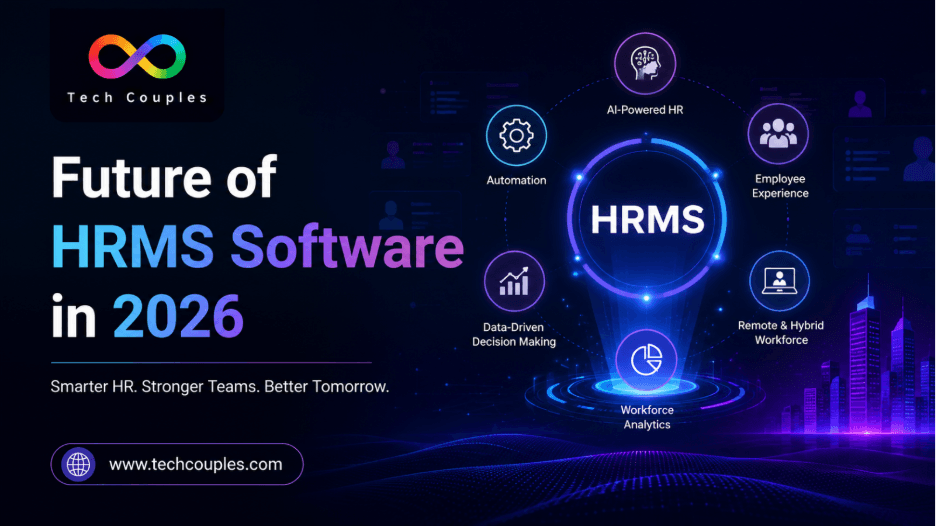
The Future of HRMS Software in 2026 is transforming the way businesses manage their workforce. As companies continue to embrace digital solutions, HR teams are moving beyond manual processes and adopting intelligent systems that improve productivity, employee engagement, and business performance. Modern HRMS platforms are no longer limited to payroll or attendance—they now support recruitment, workforce planning, performance management, and data-driven decision-making.
Businesses looking to stay competitive are investing in solutions that simplify HR operations while creating a better employee experience. Choosing the right HRMS today is an investment in tomorrow's growth.
Why HRMS Software Is Becoming Essential in 2026
Organizations of every size focus on efficiency, compliance, and employee satisfaction. This is why HRMS Trends 2026 highlight the growing demand for integrated and cloud-based HR solutions.
Some of the biggest business benefits include:
- — Reduced manual HR work
- — Improved employee experience
- — Faster decision-making through real-time insights
- — Better compliance with company policies
- — Secure storage of employee records
Businesses that modernize HR today will lead tomorrow's workforce.
Future of HRMS Software in 2026: Key Trends Businesses Should Know
The Future of HRMS Software in 2026 is driven by innovation that helps HR teams work smarter rather than harder.
1. AI in HRMS Software Is Reshaping HR Operations
The use of AI in HRMS Software is helping businesses automate repetitive HR activities while improving accuracy.
Key applications include:
- — Smart resume screening
- — Candidate shortlisting
- — Employee performance insights
- — Leave prediction
- — Personalized employee recommendations
AI allows HR professionals to spend more time on people and less on paperwork.
2. Cloud HRMS Software Will Become the New Standard
Businesses increasingly prefer Cloud HRMS Software because it offers flexibility, scalability, and secure access from anywhere.
Benefits include:
- — Easy implementation
- — Automatic software updates
- — Secure cloud storage
- — Remote workforce access
- — Lower infrastructure costs
Cloud technology supports businesses as they grow without increasing administrative complexity.
3. HRMS Automation Improves Productivity
One of the strongest HR Technology Trends 2026 is HRMS Automation, which eliminates repetitive manual tasks.
Automation helps businesses manage:
- — Employee onboarding
- — Attendance tracking
- — Leave approvals
- — Document management
- — Notification workflows
Automated HR processes reduce errors while saving valuable time.
4. HR Analytics Will Drive Better Decisions
Modern HR software provides powerful HR Analytics that help organizations understand workforce performance.
Useful insights include:
- — Employee turnover
- — Hiring effectiveness
- — Productivity reports
- — Attendance trends
- — Performance tracking
Data-backed decisions create stronger HR strategies.
5. Employee Self-Service Improves Employee Experience
Employees expect quick access to their HR information. Employee Self-Service portals allow employees to:
- — Download salary slips
- — Apply for leave
- — Update personal information
- — View attendance
- — Access HR documents
This reduces HR workload while improving employee satisfaction.
Core HRMS Features Businesses Should Prioritize
| Feature | Business Benefit |
|---|---|
| Payroll Automation | Faster and accurate salary processing |
| Recruitment Automation | Simplifies hiring and candidate management |
| Workforce Management | Better scheduling and resource planning |
| HR Analytics | Data-driven HR decisions |
| Employee Self-Service | Improved employee engagement |
| Cloud HRMS Software | Secure access from anywhere |
| HRMS Automation | Saves time and reduces manual work |
How Modern HRMS Supports Business Growth
The right HRMS platform helps businesses grow by simplifying complex HR operations.
Important advantages include:
- — Faster recruitment using Recruitment Automation
- — Accurate salary processing through Payroll Automation
- — Better employee productivity with Workforce Management
- — Improved compliance and documentation
- — Enhanced Digital HR Transformation
- — Centralized employee information
- — Better reporting for management
Businesses adopting modern HR technology today are better prepared for future workforce challenges.
Why Digital HR Transformation Matters
Digital HR Transformation is no longer optional. Companies using modern HRMS solutions can:
- — Improve employee engagement
- — Increase operational efficiency
- — Support hybrid work environments
- — Make informed business decisions
- — Build scalable HR processes
Organizations that embrace technology today will gain a significant competitive advantage tomorrow.
Choosing the Right HRMS Software
When selecting an HRMS solution, businesses should look for:
- — Cloud-based deployment
- — User-friendly interface
- — Payroll and attendance management
- — Recruitment and onboarding tools
- — HR Analytics dashboard
- — Employee Self-Service portal
- — Workflow automation
- — Secure data management
- — Scalability for business growth
Professional HRMS solutions from techcouples are designed to help businesses streamline HR operations with modern technology, automation, and scalable workforce management features.
Conclusion
The Future of HRMS Software in 2026 is centered on smarter automation, cloud technology, data-driven decision-making, and enhanced employee experiences. Businesses that invest in modern HRMS platforms can improve efficiency, reduce administrative workload, and build a future-ready workforce. As HRMS Trends 2026 continues to evolve, adopting intelligent HR technology will become a key factor in long-term business success.
Frequently Asked Questions (FAQs)
1. What is the Future of HRMS Software in 2026?
HRMS software is expected to become more intelligent through AI, automation, cloud technology, and advanced analytics, making HR processes faster and more efficient.
2. How does AI in HRMS Software help businesses?
AI improves recruitment, employee management, reporting, and decision-making while reducing repetitive manual tasks.
3. Why is Cloud HRMS Software becoming popular?
Cloud HRMS offers remote accessibility, stronger security, automatic updates, lower maintenance costs, and better scalability.
4. What are the benefits of HRMS Automation?
HRMS Automation reduces paperwork, improves accuracy, speeds up approvals, and increases overall HR productivity.
5. Which features should businesses prioritize in an HRMS?
Businesses should focus on Payroll Automation, Recruitment Automation, Workforce Management, Employee Self-Service, HR Analytics, cloud deployment, and workflow automation.
Need an engineering partner?
Let's architect your next digital system.