
How HRMS Software Reduces HR Workload by 70% (Complete Guide 2026)
Discover how HRMS Software reduces HR workload by 70% using automation, payroll, attendance, and employee management. Complete 2026 guide for modern businesses.
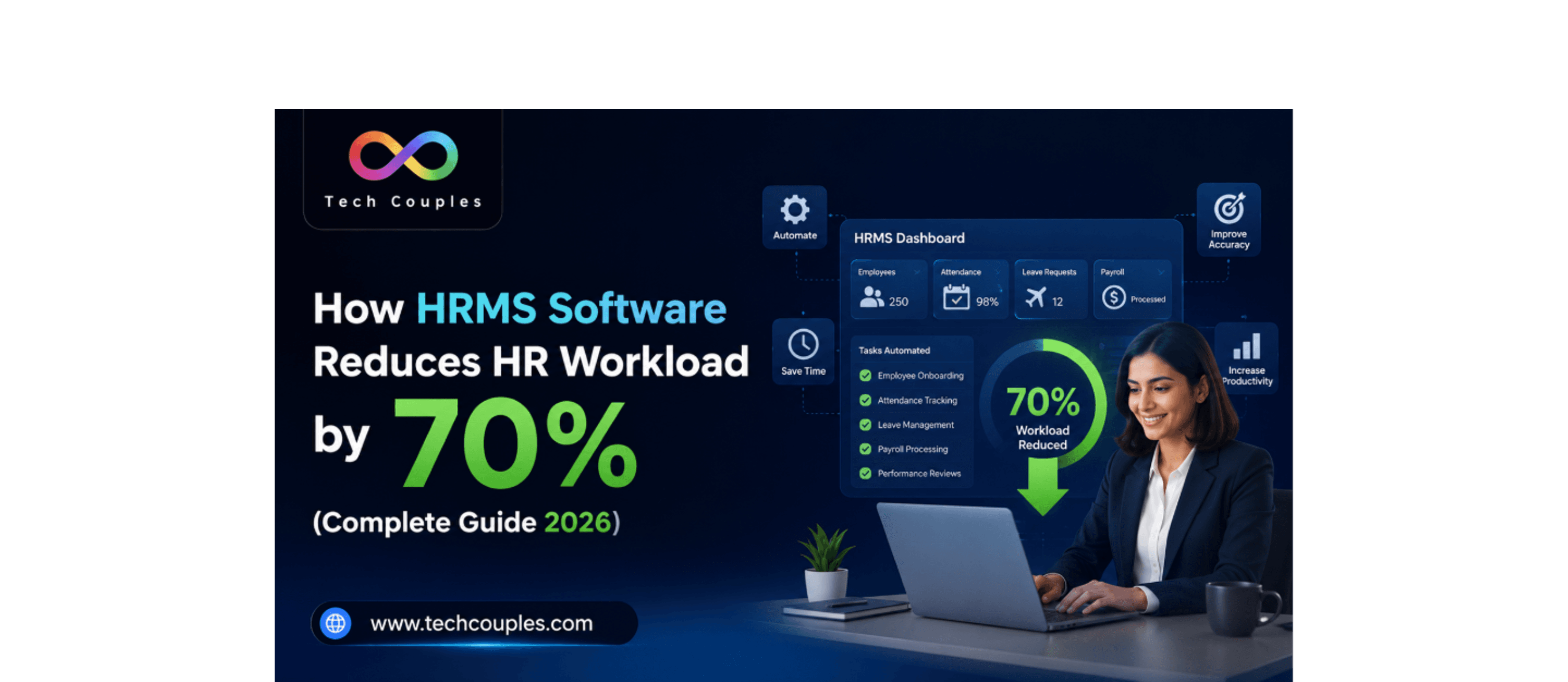
Managing employees is no longer just about maintaining spreadsheets or filing paperwork. Today's businesses need faster, smarter, and more accurate ways to handle daily HR responsibilities. How HRMS Software Reduces HR Workload by 70% is no longer a marketing claim - it has become a practical reality for organizations that embrace digital transformation. By automating repetitive processes, improving accuracy, and giving employees access to self-service features, HRMS Software helps HR teams focus on strategic growth instead of routine administration.
Whether you run a startup or a growing enterprise, investing in the right HR technology can significantly improve productivity and employee satisfaction.
What Is HRMS Software?
HRMS Software (Human Resource Management System) is a centralized platform that automates and manages core HR functions such as recruitment, attendance, payroll, leave management, employee records, and performance tracking.
Instead of handling multiple spreadsheets and manual approvals, businesses can manage everything through a single, secure dashboard.
Core Functions Include:
- — Employee onboarding
- — Attendance tracking
- — Leave management
- — Payroll Processing
- — Performance evaluation
- — Employee Records management
- — HR reporting and analytics
A modern HRMS allows HR professionals to work smarter, not harder.
How Traditional HR Processes Slow Down Businesses
Manual HR processes often create unnecessary delays and increase operational costs. Some common challenges include:
| Traditional HR Challenges | Business Impact |
|---|---|
| Manual attendance tracking | Time-consuming and error-prone |
| Paper-based employee files | Difficult to manage and retrieve |
| Manual payroll calculations | Payroll errors and compliance risks |
| Lengthy approval workflows | Reduced productivity |
| Multiple spreadsheets | Data duplication and inconsistencies |
These inefficiencies consume valuable time that HR professionals could spend improving employee engagement and organizational development.
How HRMS Software Reduces HR Workload by 70%
Modern businesses are rapidly adopting digital solutions because HRMS Software Reduces HR Workload by 70% is supported by automation, streamlined workflows, and centralized data management.
1. Automates Repetitive HR Tasks
One of the biggest HRMS software benefits is automation. Routine tasks such as leave approvals, attendance updates, onboarding checklists, and document management can run automatically without constant human intervention. This allows HR teams to dedicate more time to talent development and workforce planning.
2. Simplifies Employee Management
An advanced Employee management software stores complete employee profiles in one secure location. HR managers can instantly access:
- — Employment history
- — Contact details
- — Performance records
- — Documents
- — Training information
Centralized information reduces paperwork and improves decision-making.
3. Makes Payroll Faster and More Accurate
Salary processing is one of the most sensitive HR responsibilities. Reliable Payroll management software automatically calculates salaries, deductions, bonuses, taxes, and reimbursements. Accurate Payroll Processing minimizes costly errors while ensuring employees receive their salaries on time.
4. Automates Attendance Tracking
Modern Attendance management software integrates with biometric devices, mobile applications, and cloud systems.
Benefits include:
- — Real-time attendance
- — Shift scheduling
- — Overtime calculation
- — Remote workforce tracking
This eliminates manual attendance registers and improves operational efficiency.
5. Reduces Manual Work Across HR Operations
Businesses increasingly rely on HR automation software because it simplifies approvals, notifications, reminders, and reporting. Instead of manually following up with employees, automated workflows handle routine communication efficiently. This is exactly why companies invest in HR software to reduce manual work and improve overall productivity.
Key Benefits of HRMS Software
Organizations using HRMS experience measurable improvements across multiple departments.
| Feature | Business Benefit |
|---|---|
| Automated Payroll | Faster salary processing |
| Attendance Automation | Accurate workforce tracking |
| Employee Self-Service | Fewer HR support requests |
| Digital Employee Records | Better compliance and organization |
| Real-Time Reports | Faster business decisions |
| Cloud Accessibility | Work from anywhere |
These HRMS software benefits not only save time but also improve transparency and employee satisfaction.
Why HRMS Matters in 2026
The workplace continues to evolve with hybrid work models, remote teams, and increasing compliance requirements. Modern Human Resource Management now demands technology that can:
- — Improve Workforce Management
- — Protect sensitive employee data
- — Generate instant reports
- — Support business scalability
- — Enhance employee experiences
Companies that continue relying on manual systems often struggle to remain competitive.
Best Practices Before Choosing an HRMS
Selecting the right HRMS requires careful planning. Consider software that offers:
- — Easy-to-use interface
- — Strong data security
- — Payroll integration
- — Attendance management
- — Mobile accessibility
- — Custom reporting
- — Reliable customer support
- — Scalability for future growth
Choosing the right platform ensures long-term value for your business.
Why Businesses Trust www.techcouples.com
Businesses looking for reliable digital HR solutions can explore www.techcouples.com for innovative software that simplifies HR operations. From workforce automation to employee management, modern HRMS solutions help organizations save time, improve accuracy, and strengthen productivity.
Conclusion
As businesses continue embracing digital transformation, How HRMS Software Reduces HR Workload by 70% becomes more evident through automation, streamlined workflows, and centralized data management. From Employee management software and Attendance management software to Payroll management software, every feature contributes to faster HR Operations and stronger Workforce Management.
Organizations that adopt modern HRMS Software gain higher efficiency, fewer manual errors, improved Payroll Processing, and better Employee Records management. If your goal is to increase productivity while reducing administrative effort, now is the ideal time to invest in the right HR solution. How HRMS Software Reduces HR Workload by 70% is not just a trend - it is a smarter way to build a future-ready workplace.
Frequently Asked Questions (FAQs)
1. What is HRMS Software?
HRMS Software is a digital platform that automates HR functions such as payroll, attendance, employee records, leave management, recruitment, and reporting.
2. How does HRMS Software reduce HR workload?
It automates repetitive administrative tasks, minimizes manual errors, centralizes employee information, and streamlines HR workflows.
3. Is HRMS Software suitable for small businesses?
Yes. Modern HRMS solutions are scalable and help small businesses save time, improve compliance, and manage employees more efficiently.
4. What are the biggest HRMS software benefits?
Major benefits include automated payroll, accurate attendance tracking, secure employee records, improved reporting, and better workforce management.
5. Why should companies use HR automation software in 2026?
HR automation software improves efficiency, supports remote work, enhances compliance, reduces operational costs, and enables HR teams to focus on strategic business growth instead of routine administrative tasks.
Need an engineering partner?
Let's architect your next digital system.